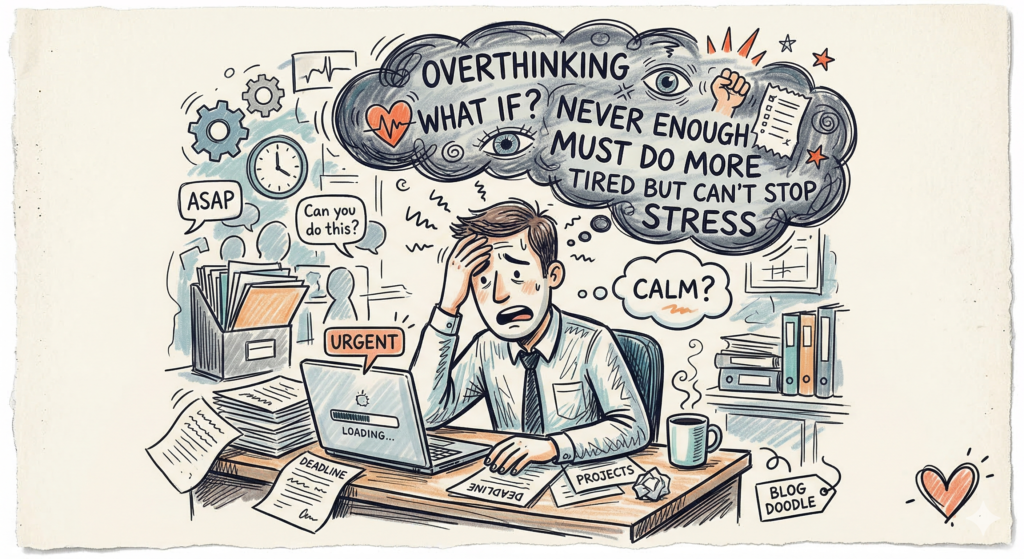
At Dr. Grounded, we get asked about ashwagandha almost every week now. And honestly, the question deserves a proper answer and not a supplement company blog post and not a research paper written for other doctors.
So here it is. What the evidence actually says, explained clearly.
What is ashwagandha?
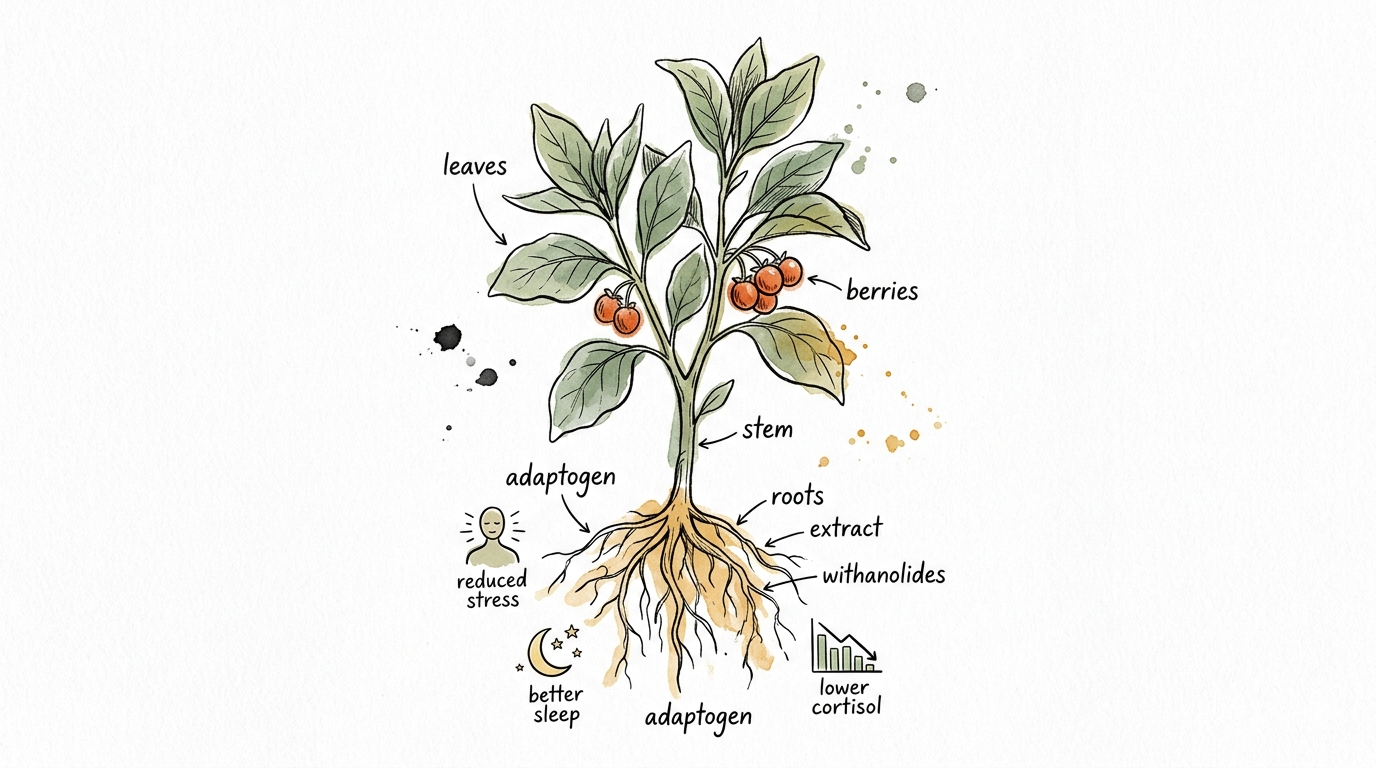
Ashwagandha is an evergreen shrub native to India, Africa, and parts of the Middle East. Its scientific name is Withania somnifera, somnifera coming from the Latin word for sleep-inducing, which tells you something about how it has been used for centuries. Many people wonder about ashwagandha anxiety and its effects.
It has been a staple of Ayurvedic medicine for over 3,000 years. The word ashwagandha itself translates roughly to “smell of horse” , a reference both to its aroma and to the traditional belief that it could give its user the strength and vitality of a horse.
Research suggests that ashwagandha may help with anxiety, making it a topic of interest for those seeking natural remedies.
Today it is one of the most searched supplements in the world. In 2024 alone, ashwagandha searches increased by over 110%. People are looking for something that helps with stress and anxiety without the side effects of medication. That is a completely understandable thing to want.
The question is whether ashwagandha actually delivers.
How does it work?
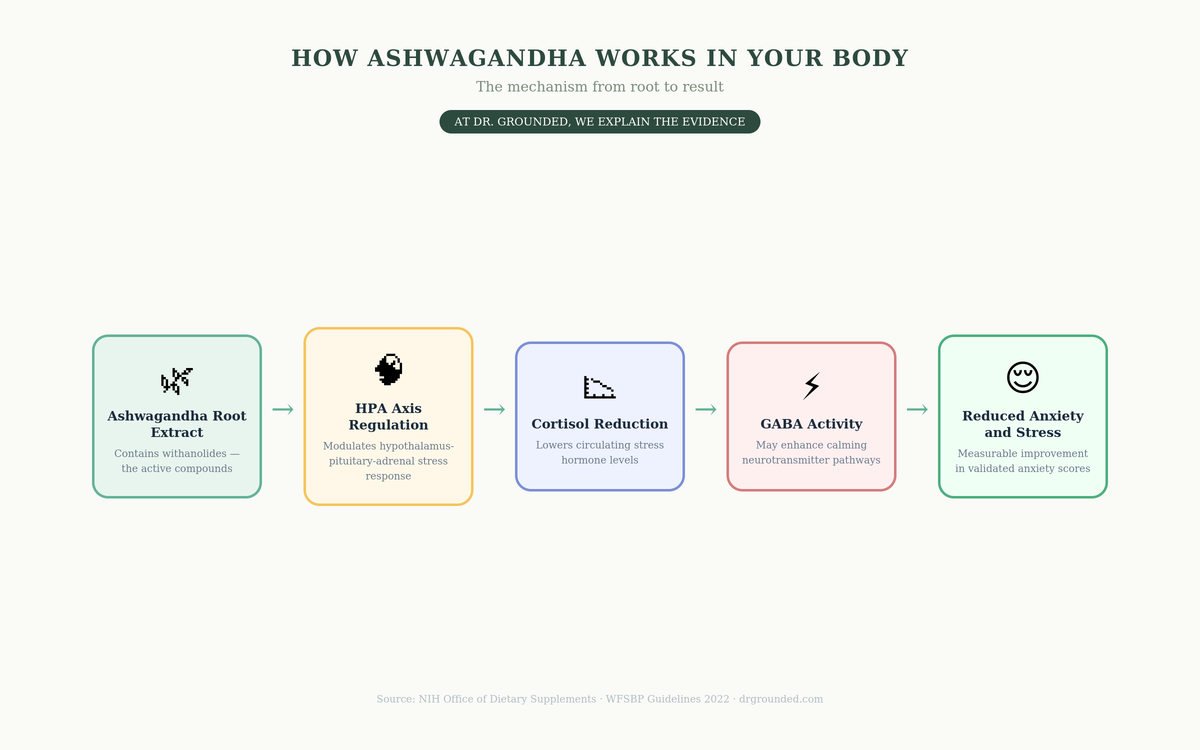
The active compounds in ashwagandha are called withanolides , a group of naturally occurring steroidal lactones found mainly in the root. These are believed to be responsible for most of its reported effects, though researchers think other compounds in the plant may also play a role.
The main mechanism appears to work through the hypothalamus-pituitary-adrenal axis where the system in your body that controls your stress response. When you are under stress, this system releases cortisol. Ashwagandha appears to dampen this response, resulting in lower circulating cortisol levels.
There is also evidence that it may enhance GABA activity, GABA being the neurotransmitter that essentially tells your brain to calm down. This is the same pathway targeted by some anti-anxiety medications, which is why some researchers have compared its effect to low-dose benzodiazepines. Though that comparison should come with a significant caveat that the evidence for that is mostly from animal studies, not humans.
What does the research actually show?
This is where it gets interesting.
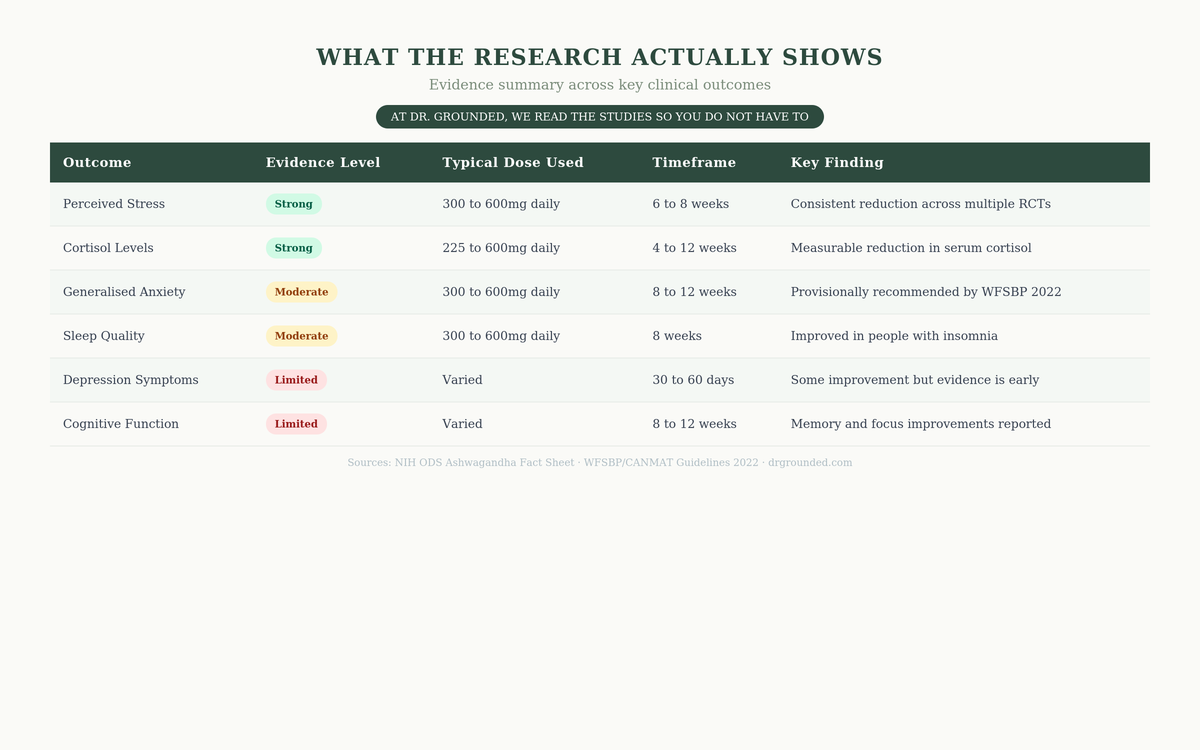
The evidence for ashwagandha and stress is genuinely quite consistent. Multiple randomised controlled trials have shown that people taking ashwagandha report significantly less perceived stress compared to those taking a placebo. They also show measurably lower cortisol levels in their blood. That is not nothing. That is a real finding replicated across different study populations.
For anxiety specifically, the picture is a little more nuanced.
In 2022 a joint taskforce from the World Federation of Societies of Biological Psychiatry and the Canadian Network for Mood and Anxiety Treatments two serious international bodies provisionally recommended a daily dose of 300 to 600mg of ashwagandha root extract for the treatment of generalised anxiety disorder. They noted more research is needed before they could make a stronger recommendation. But provisional recommendation from an international body is meaningful. It means the evidence was sufficient to take seriously, even if it is not yet definitive.
“The evidence for ashwagandha reducing perceived stress is genuinely consistent. Multiple trials show lower cortisol and lower anxiety scores. That is worth paying attention to — even if we need more data before we can call it a first-line treatment.”
Dr. Grounded · Family Medicine Doctor
For sleep, a smaller number of studies suggest ashwagandha may improve sleep quality and reduce the time it takes to fall asleep. These benefits seem more pronounced in people who already have insomnia.
Who is it actually for?
This is the question I find most useful to answer in practice.
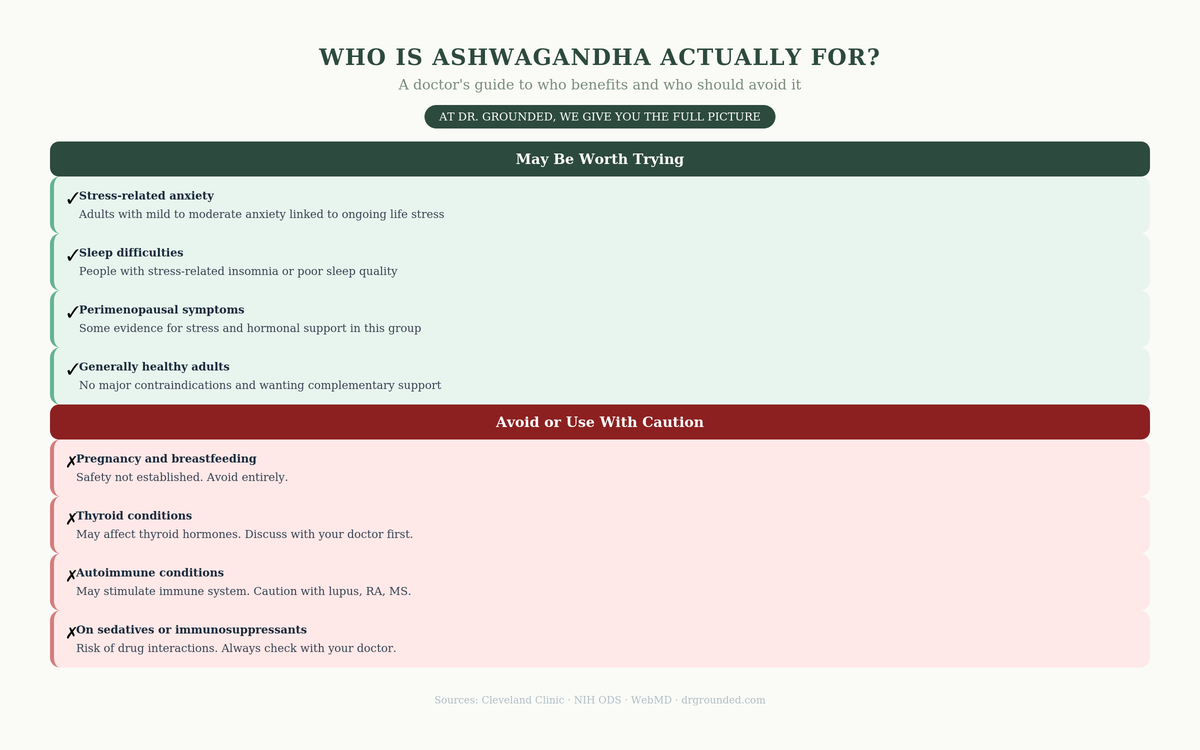
Ashwagandha appears most helpful for people whose anxiety is primarily driven by ongoing stress. If you are chronically overworked, running on empty, sleeping badly, and feeling a constant low level of tension that is the profile where the evidence is strongest.
If your anxiety has a different root trauma, a specific phobia, panic disorder, OCD, or moderate to severe depression the evidence for ashwagandha is much weaker. It is not a substitute for therapy. It is not a substitute for medication when medication is clinically indicated.
It is a complementary tool. Used appropriately, it may provide genuine support. Used as a way to avoid addressing the real cause of your anxiety, it will not help you.
Who should avoid it?
This is important and often left out of supplement marketing.
Ashwagandha should be avoided in pregnancy and breastfeeding as the safety data simply is not there. People with thyroid conditions should use it cautiously and ideally only under medical supervision, as there is evidence it can affect thyroid hormone levels. People with autoimmune conditions including lupus, rheumatoid arthritis, and multiple sclerosis should also approach with caution as ashwagandha may stimulate the immune system in ways that could worsen these conditions.
If you are taking sedatives, immunosuppressants, thyroid medications, or medications for diabetes or blood pressure — speak to your doctor before starting ashwagandha. There are meaningful potential interactions.
Dosing — what the evidence recommends
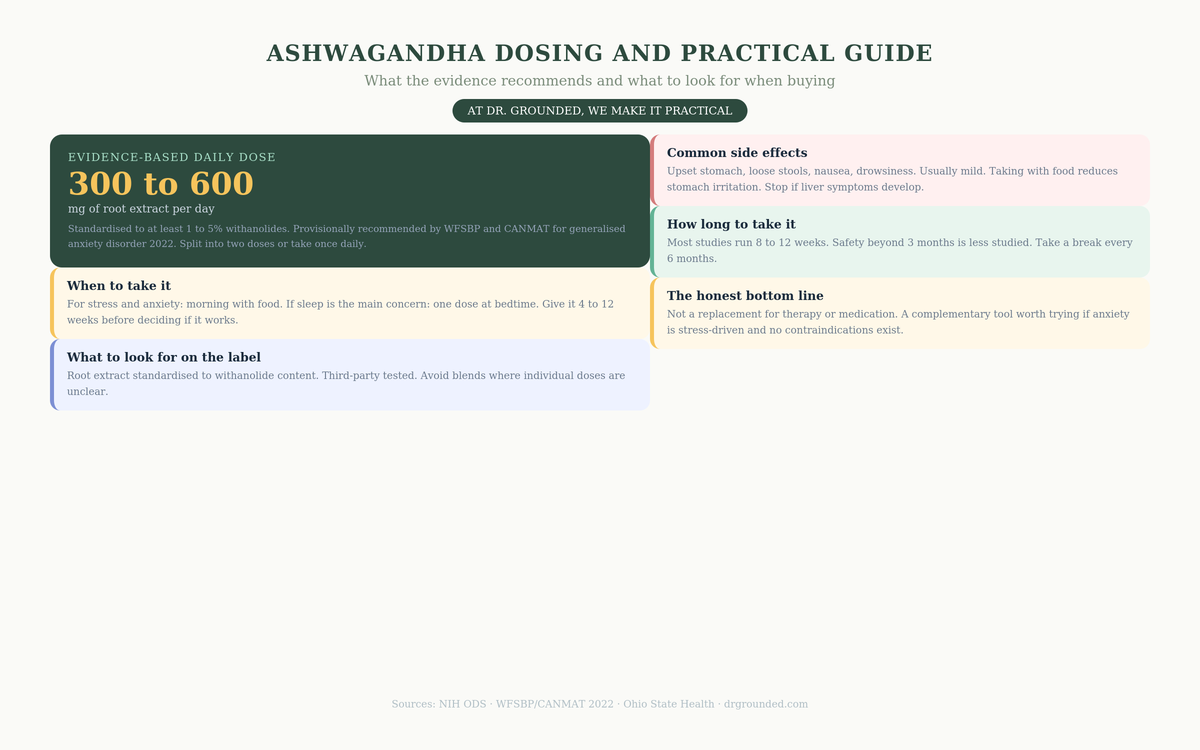
The dose used in most studies and provisionally recommended by the international taskforce is 300 to 600mg of root extract per day, standardised to at least 1 to 5% withanolides. This is a meaningful detail that not all ashwagandha products on the market are standardised, which means the actual active compound content varies enormously between brands.
Most studies run for 8 to 12 weeks. If you do not notice any change after 12 weeks of consistent use at an evidence-based dose, it is unlikely to work for you.
Take it with food to reduce the likelihood of stomach upset. If sleep is your primary concern, a bedtime dose may be more appropriate.
The Dr. Grounded verdict
Ashwagandha is not a miracle supplement. But it is not snake oil either.
For adults with mild to moderate stress-related anxiety and no significant contraindications, the evidence is strong enough to make it worth a careful try. It has a reasonable safety profile for short-term use. The dose is well defined. And the mechanism makes physiological sense.
The caveat is important though. Supplements are not regulated the same way medications are. Quality varies enormously between products. And nothing in a capsule will address the source of your anxiety if that source is a job you hate, a relationship that is not working, or a life that has stopped feeling sustainable.
If you are considering ashwagandha, talk to your doctor first particularly if you have any of the conditions mentioned above or take regular medications.
And if your anxiety feels more than mild or is significantly affecting your daily life, please seek proper support. Ashwagandha is not the answer to that.
References
National Institutes of Health Office of Dietary Supplements. Ashwagandha Fact Sheet for Health Professionals. 2024.
Pratte MA, Nanavati KB, Young V, Morley CP. An alternative treatment for anxiety: a systematic review of human trial results reported for the Ayurvedic herb ashwagandha. J Altern Complement Med. 2014.
Savage K, Firth J, Stough C, Sarris J. GABA-modulating phytomedicines for anxiety. Phytother Res. 2018.
WFSBP/CANMAT Taskforce. Nutraceuticals in anxiety disorders. World J Biol Psychiatry. 2022.