
Dr. Grounded · Mental Wellness & Burnout · 5 min read · Evidence graded
High functioning anxiety symptoms affect millions of people who look completely fine on the outside. At Dr. Grounded, we believe some of the most exhausted people in the world are the ones nobody suspects. This article is for them.
You answer emails on time. You show up. You get things done.
And yet your mind never stops.
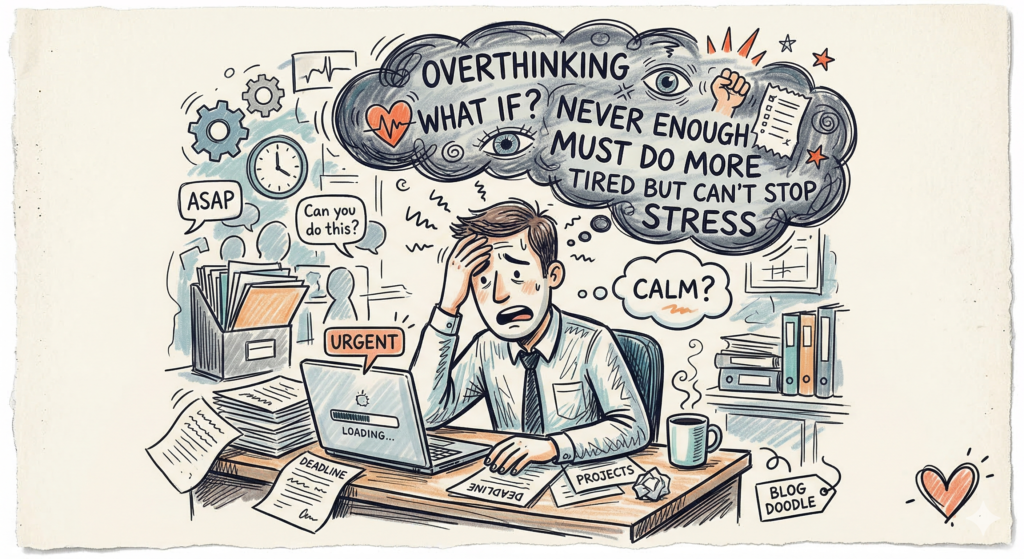
You lie awake at night replaying conversations. You overthink decisions that should take two minutes. You feel a low hum of worry underneath everything, even on good days. You smile and say you are fine. Because honestly you are functioning. You are coping. You are managing.
But are you okay?
I have been there. I know what it feels like to keep moving while something quietly churns underneath. I have also sat with it as a doctor, watching high-achieving patients describe exhaustion that no blood test could explain.
There is a name for this. It is called high functioning anxiety. And it is far more common than most people realise.
So what actually is high functioning anxiety?
It is not an official medical diagnosis. You will not find it in the clinical textbook. But it describes something very real — a person who carries significant anxiety while still appearing to have everything together.
Think of it like a swan. Gliding smoothly on the surface. Paddling furiously underneath.
The key difference from regular anxiety is this. With generalised anxiety disorder, people tend to retreat or avoid situations. With high functioning anxiety, people push harder. They work more, control more, achieve more as a way of managing the fear inside.
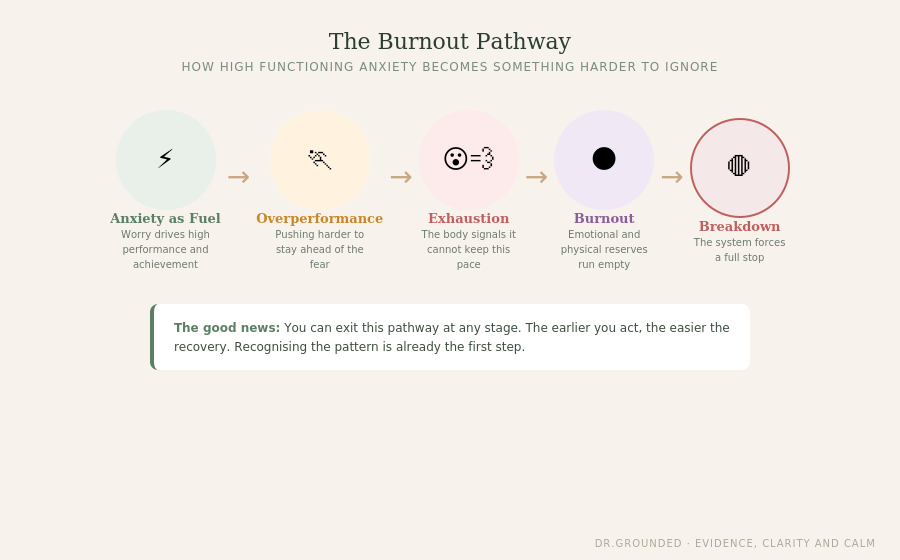
The anxiety becomes the engine. And for a while, it works. Until it does not.
What does it actually feel like?
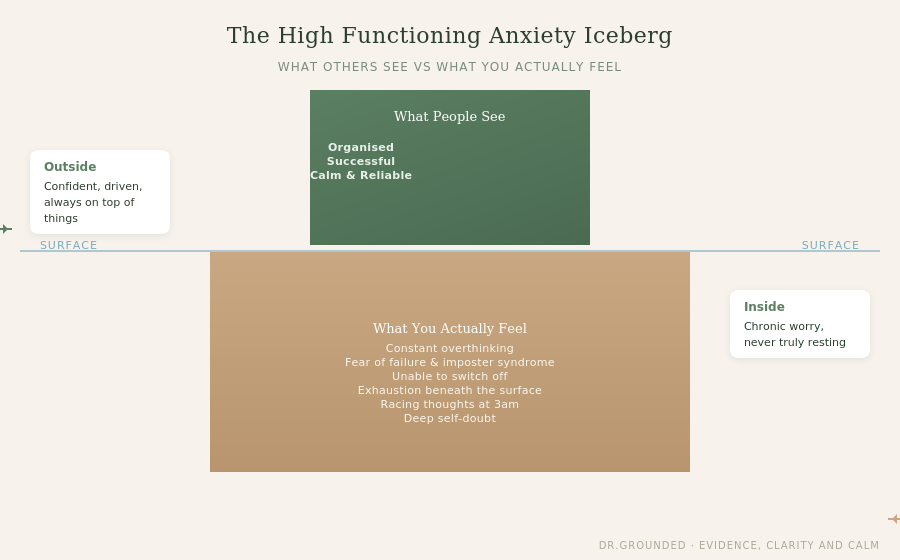
In 2024, 43% of adults reported feeling more anxious than the year before. Most of them were still showing up. Still functioning. Still saying they were fine.
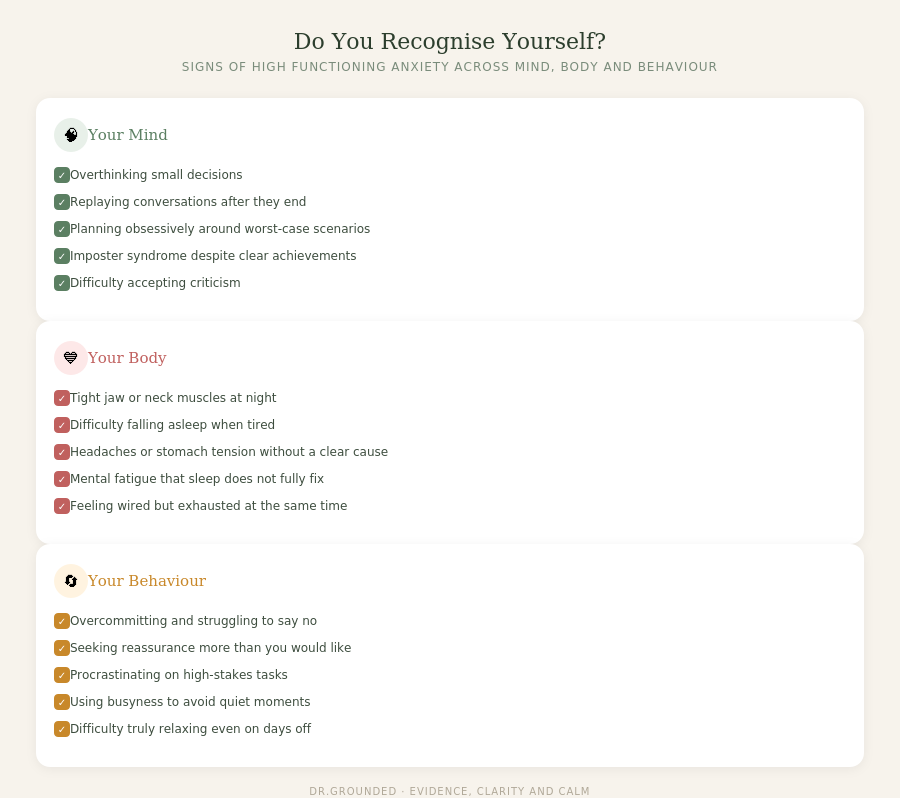
Here are the signs that show up most often.
In your mind: Overthinking small decisions. Replaying conversations long after they ended. Planning obsessively around lists, schedules and worst-case scenarios. Imposter syndrome despite clear evidence of your competence. Difficulty accepting criticism without it cutting deep.
In your body: Tight jaw or neck muscles, especially at night. Difficulty falling asleep even when exhausted. Headaches or stomach tension with no clear cause. Mental fatigue that sleep does not fully fix.
In your behaviour: Overcommitting and struggling to say no. Seeking reassurance from others more than you would like. Procrastinating on things that feel too high stakes to begin. Using busyness to avoid sitting quietly with your own thoughts.
Why does it matter if you are still functioning?
Because functioning and thriving are not the same thing.
Nearly half of those diagnosed with depression are also diagnosed with an anxiety disorder. 60% of people with anxiety will experience symptoms of depression at some point in their lives. The two do not always arrive separately.
High functioning anxiety that goes unaddressed quietly erodes your relationships, your sleep, your joy and eventually your health. This is not about catastrophising. It is about catching things early, before the engine burns out completely.
What actually helps?
The good news is that this responds well to non-medication approaches, especially when caught early.
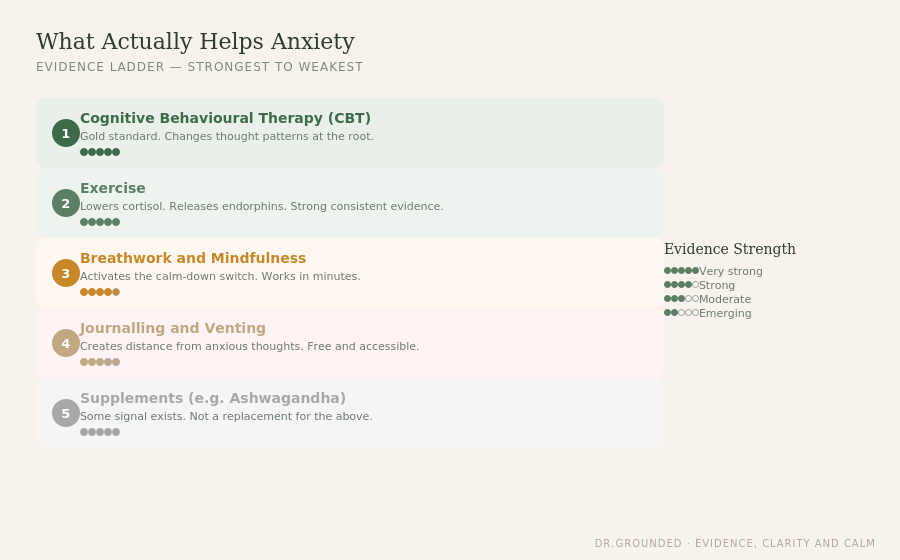
Cognitive Behavioural Therapy (CBT) CBT is considered the gold standard treatment for anxiety. It helps you build healthier thinking patterns and reduces avoidance behaviours over time. It is not about positive thinking. It is about learning to question the thoughts that run on autopilot. If you are looking for a place to start with CBT online, Online-Therapy.com offers structured sessions with a licensed therapist — no waiting room needed –> Online-Therapy.com
Exercise Consistent physical activity is one of the most evidence-backed tools for anxiety. It lowers cortisol, releases endorphins and gives the nervous system something real to do with all that energy.
Breathwork and mindfulness Slow, intentional breathing activates your parasympathetic nervous system — the calm-down switch. Even five minutes changes your physiology.
Journalling Writing thoughts down moves them from your head onto a page where you can look at them clearly. It creates distance. And distance is clarifying.
Venting with the right person Talking to someone you trust, not to be fixed but simply to be heard, is genuinely therapeutic. The nervous system responds to safety and connection.
I used all of these myself. Not as a formal protocol. As survival tools that became habits. They work. Not overnight, but they work.
Dr. Grounded’s Verdict
High functioning anxiety is real, common and quietly exhausting. The fact that you are still functioning does not mean you are okay. It just means you are very good at managing.
At Dr. Grounded, our recommendation is this. If you recognise yourself in this article, please do not wait until you stop functioning to take it seriously. Talk to someone. Start small. One thing at a time.
You do not have to feel like this forever.
3 things to remember:
- High functioning anxiety is not weakness. It is a pattern that can be changed.
- The most effective tools are free — movement, breath, journalling, connection.
- If it is affecting your sleep, your relationships or your joy, that is enough reason to get support.
References: American Psychiatric Association 2024 Survey · Cleveland Clinic 2025 · Psychology Today January 2025 · Ochsner Health 2025 · National Institute of Mental Health · National Alliance on Mental Illness
This is educational content, not medical advice. Always speak to your own doctor.