Dr. Grounded · Menopause & Women’s Health · 5 min read · Evidence graded
Menopause symptoms affect millions of women and yet most are never properly told what is happening. At Dr. Grounded, we believe every woman deserves a calm, honest explanation. Just the truth, in plain language.
You are not going crazy.
The hot flushes at 2am. The brain fog that makes you forget words mid-sentence. The mood swings that feel completely unlike you. The joint aches nobody warned you about.
These are real. They have a clear medical explanation. And millions of women go through them every year without ever being properly told what is happening.
Let us fix that.
So what actually is menopause?
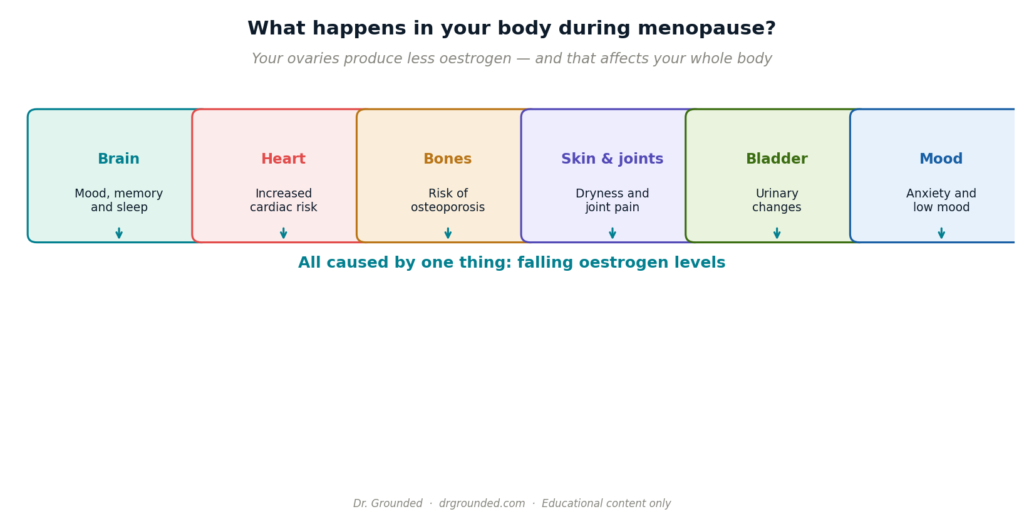
Simple version: your ovaries gradually stop making a hormone called oestrogen.
That might sound like a small thing. But oestrogen is found all over your body not just your reproductive system. It is in your brain. Your bones. Your heart. Your skin. Your bladder.
So when it falls, you feel it everywhere.
How Common Are Menopause Symptoms?
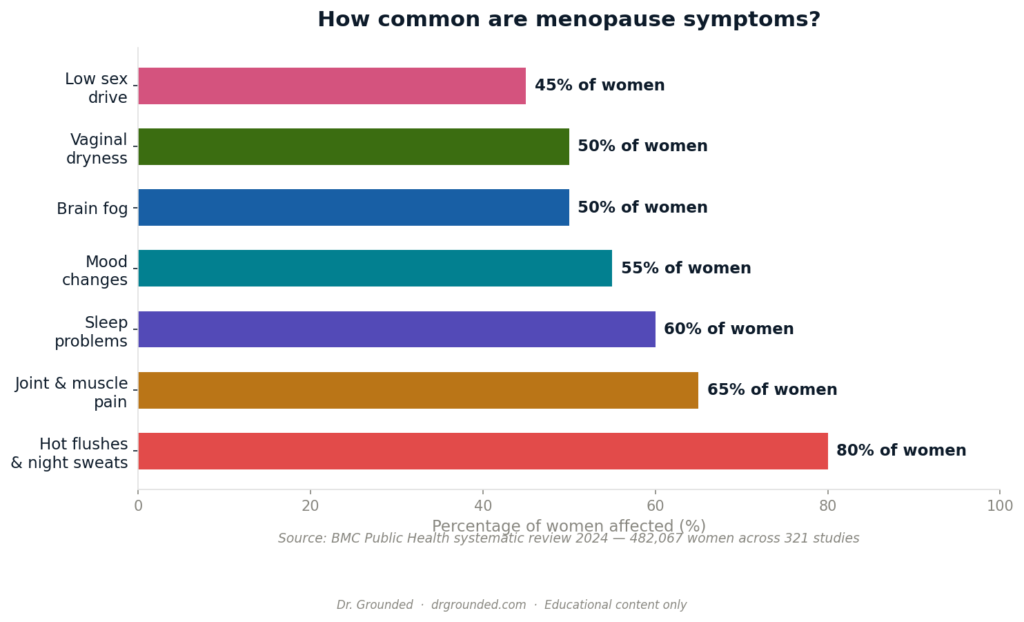
Very. You are far from alone. A massive 2024 review of 482,067 women across 321 studies found that joint and muscle pain is actually the most common symptom, affecting 65% of women , followed closely by hot flushes and night sweats.
Hot flushes affect up to 80% of women and can last anywhere from 1 to 6 years and in about 10% of women, up to 15 years.
When does it start?
Earlier than most women expect.
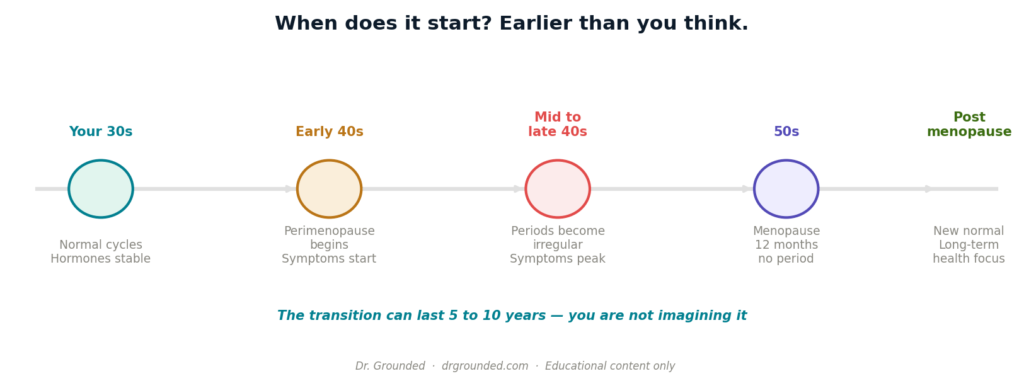
The transition also called as perimenopause can begin several years before your last period, often in your early to mid 40s.
Many women in their early 40s are already in perimenopause and do not know it. Their symptoms get dismissed as stress or anxiety. Sometimes they get given antidepressants when what they actually need is a proper hormonal conversation.
If that has happened to you , you must know that you are not alone and you deserve better.
What does it do long-term?
This is the part that does not get talked about enough.
Menopause is not just about hot flushes. Falling oestrogen levels affect your heart and your bones too.
Women who go through menopause early , before age 40 and some have a 55% higher risk of a heart attack or stroke compared to women who go through it at the normal age. Shopify
Early menopause also raises the risk of osteoporosis weak bones — by 83%.
This is not to frighten you. It is to help you take it seriously and get the right support early.
What actually helps?
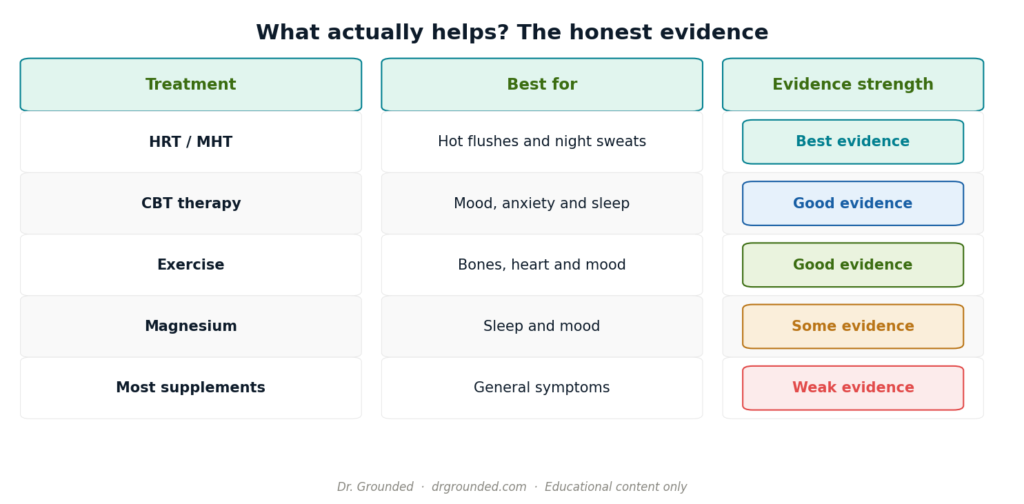
The strongest evidence supports hormone replacement therapy (HRT) are for hot flushes and mood problems linked to menopause. Rewardful
CBT : a type of talking therapy , has good evidence for helping with anxiety, low mood, and sleep problems during menopause. FirstPromoter
Exercise : especially strength training –> helps your bones and your heart and your mood. And it is free.
The same is true for metabolic health. Lifestyle changes can make a real difference. drgrounded.com/she-stopped-metformin
Most supplements sold for menopause have very weak evidence behind them. Some may help a little. Most are expensive passengers. We will review the evidence on specific ones in future articles.
Dr. Grounded’s verdict
Menopause is one of the most under discussed health topics for women , yet it affects every single woman alive.
At Dr. Grounded, our recommendation is this: if you are in your 40s and noticing changes in your mood, sleep, memory, or periods please do not brush it off as stress. Ask your doctor specifically about perimenopause. Bring this article if it helps start the conversation.
You are not imagining it. And you deserve a proper answer.
3 things to remember
- Perimenopause can start in your early 40s , way before your periods stop
- Menopause affects your heart and bones and not just your reproductive system
- HRT has the best evidence for hot flushes so please talk to your doctor about whether it is right for you
Sources: BMC Public Health 2024 (321 studies, 482,067 women) ·
The Lancet 2024 ·
BMJ Sexual & Reproductive Health 2024 (systematic review of 5 clinical guidelines) ·
StatPearls NCBI 2024 · ScienceDirect 2024
Disclosure: This article contains no affiliate links. Dr. Grounded only recommends products with genuine evidence. This is educational content — not medical advice.