
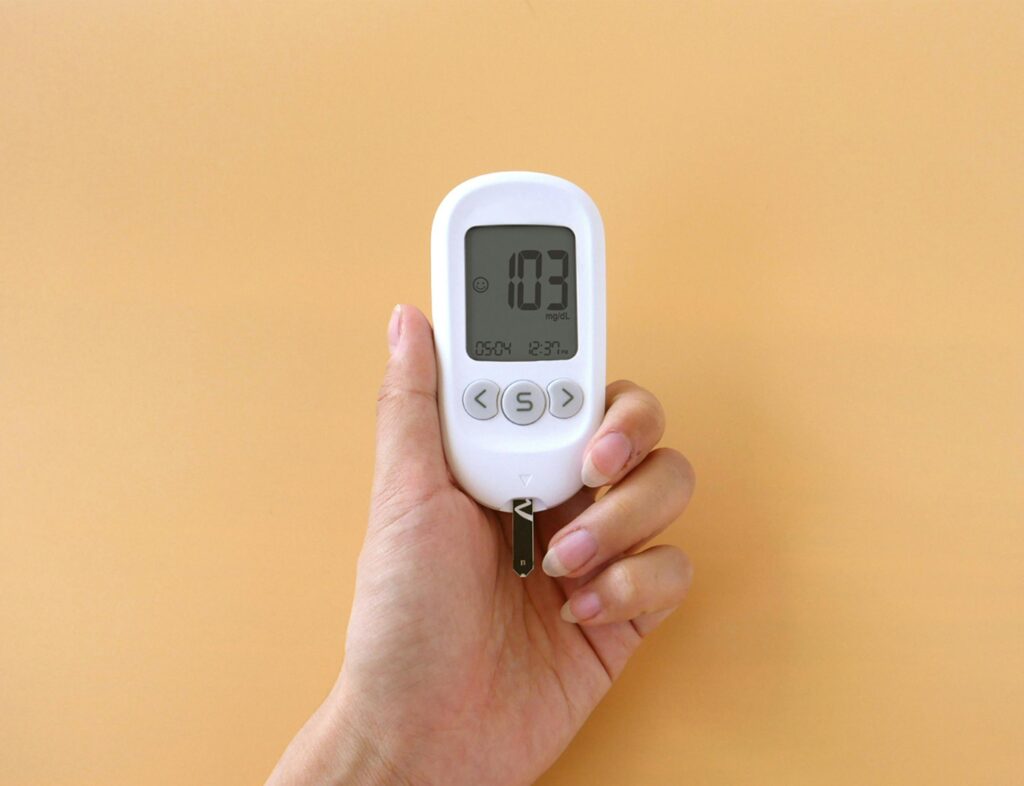
8 min read
Evidence graded
A patient walked into my clinic carrying a bag of supplements and a result that made me sit back in my chair. This is what I found when I went to PubMed — and what I think actually happened.
Before we begin: This story is based on a real clinical encounter, anonymised to protect patient privacy. Key details have been changed. This is not medical advice — please do not stop any medication without consulting your own doctor.
She walked in like most patients do slightly hesitant, carrying a plastic bag of supplement bottles on the chair beside her.
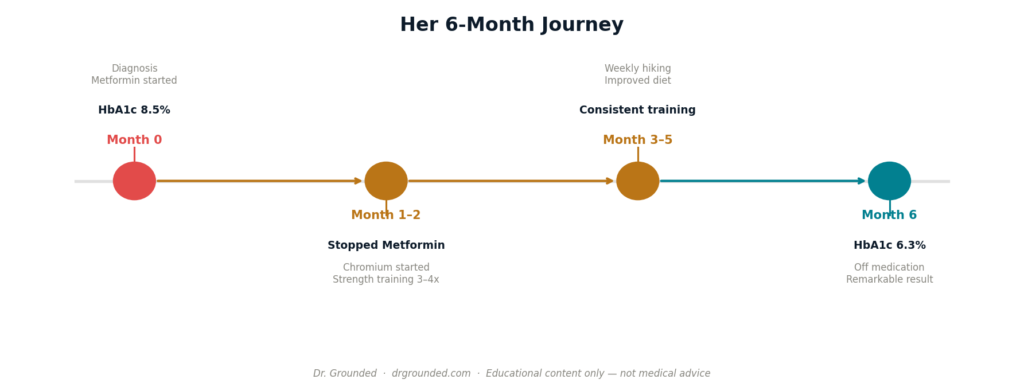
A healthcare professional in her mid-thirties. Active, educated, health-aware. Six months earlier, an unrelated infection had led us to check her bloods. Her HbA1c came back at 8.5%. We sat together, I explained the diagnosis, started her on Metformin, gave dietary advice, and asked her to return in three months.
She didn’t come back at three months. She came back at six.
“Doctor, I stopped the Metformin,” she said, placing the bottles on my desk. “I saw a functional medicine doctor. He put me on these instead.”
I looked at the bottles. Chromium. Blueberry extract.
I looked at her latest blood results.
HbA1c: 6.3%
I sat back. Because that is a remarkable result. And I needed to understand what actually happened here.
First — what is HbA1c and why does it matter?
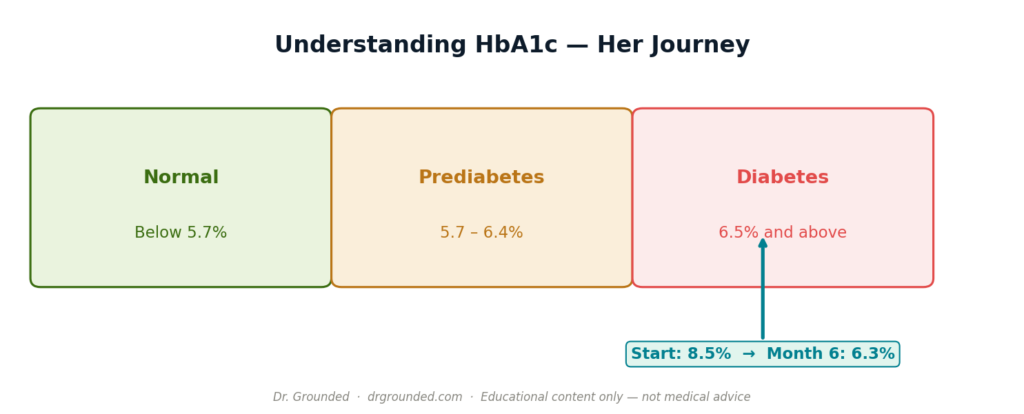
Think of HbA1c as a 3-month blood sugar average. Red blood cells live for about 90 days. Glucose sticks to them during that time. The more glucose in your blood, the higher the percentage. Here’s where she started — and where she ended up.
Her six-month journey — what actually changed
What the evidence actually says
I went to PubMed. Here is what I found — honestly, with no agenda.
The evidence base
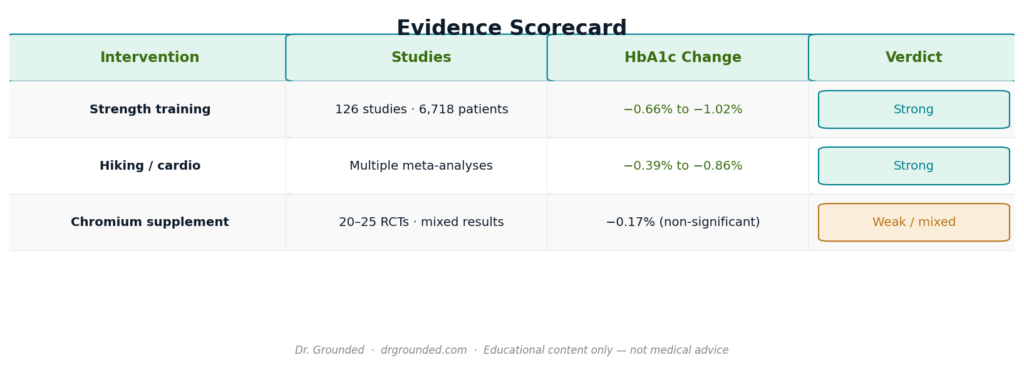
Exercise data drawn from Diabetes Care 2024 meta-analysis (126 studies, 6,718 patients), BMJ Open Diabetes 2022 (20 RCTs, 1,172 patients), and ScienceDirect 2025 (13 RCTs). Chromium data from two systematic reviews — one finding non-significant results (20 RCTs, I²=96%), one finding modest benefit (25 RCTs, selected subgroups).
Graphic 3 — HbA1c reduction: exercise vs chromium supplements
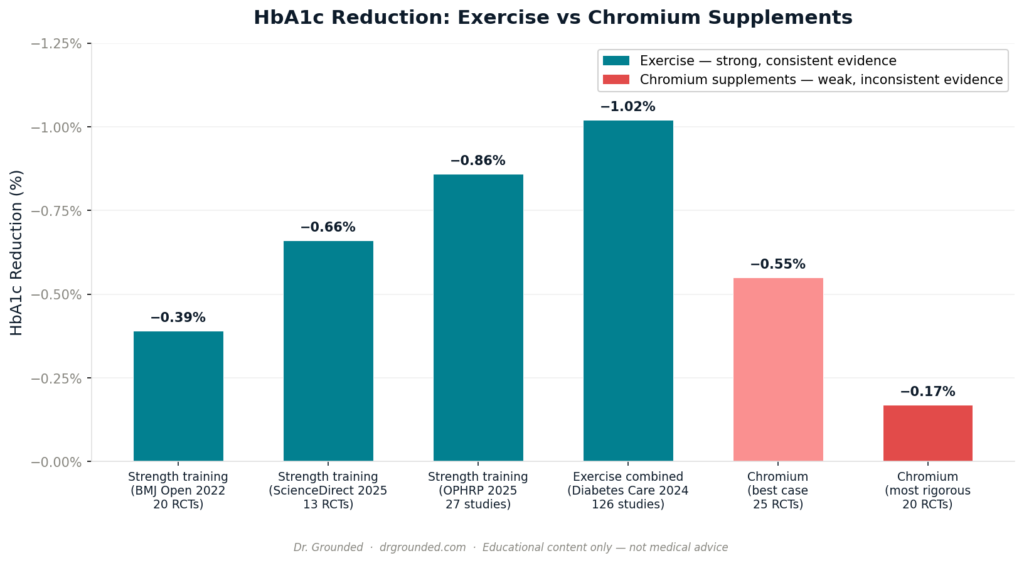
Exercise — significant, consistent evidenceChromium — mixed, inconsistent evidence
The bars tell the story plainly. Exercise produces consistent, clinically meaningful reductions in HbA1c across hundreds of studies. Chromium produces a modest, inconsistent signal in selected subgroups — and no significant effect in the most comprehensive review.
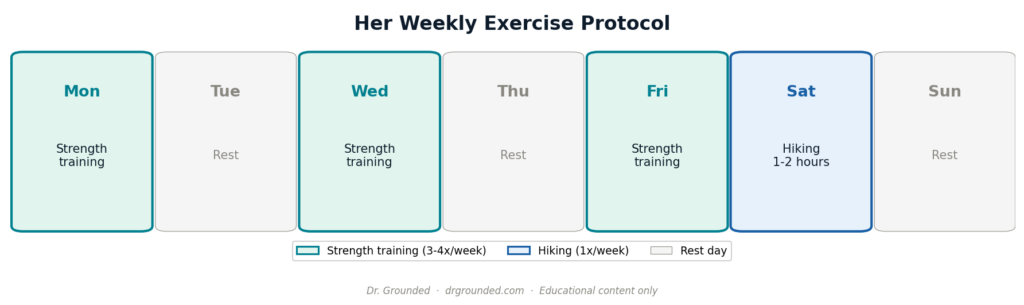
What she actually did — the protocol
So what actually reversed her diabetes?
Let me be direct. She completed approximately 100+ hours of structured exercise over six months. The evidence for that intervention reducing HbA1c is among the strongest in all of metabolic medicine.
The chromium and blueberry extract may have contributed a small signal. Or they may have done nothing measurable. We simply cannot separate their effect from the exercise — and neither could the functional medicine doctor who took the credit.
My take ?
Her result was extraordinary — but it was built on effort, not on supplements. The functional medicine doctor spotted something important: that she needed a complete lifestyle overhaul, not just a pill. I respect that. But the supplements were expensive passengers on an exercise-powered journey. The good news? The exercise is free. And it works whether your HbA1c is 6.5% or 11%.
The part that concerns me
She stopped Metformin without medical supervision. Metformin is one of the safest, most evidence-based medications in medicine — with 60+ years of safety data, cardiovascular benefits, and emerging anti-cancer properties. Her outcome was excellent. But had the exercise not worked, stopping Metformin could have caused real harm. Please never stop prescribed medication without discussing it with your doctor first.
The question I want to leave you with
The functional medicine doctor charged a consultation fee, sold supplements with thin evidence, and received credit for results that 100 hours of exercise produced.
Meanwhile — the advice that actually worked was free. Accessible to anyone. Backed by hundreds of studies.
Why do we find it easier to swallow a pill than to trust that our own effort is enough?
I’d genuinely like to know what you think. Leave a comment below.
3 things to remember
1. Strength training and cardio are among the most powerful tools we have for blood sugar control — backed by hundreds of studies across thousands of patients.
2. Chromium supplements show mixed, inconsistent evidence — some signal exists but it does not reliably hit clinical targets on its own.
3. Never stop prescribed medication without medical supervision — even when your results look good.
Disclosure: No affiliate links in this article. Dr. Grounded does not promote supplements without strong evidence. · This is educational content — not medical advice. Always consult your own physician before making any changes to your medication or health routine. · Sources: Diabetes Care 2024 meta-analysis (126 studies, 6,718 patients) · BMJ Open Diabetes Research & Care 2022 (PMID 35273011) · ScienceDirect 2025 (13 RCTs, resistance training) · OPHRP 2025 (27 studies) · Chromium systematic review PMC 5009459 · Frontiers in Endocrinology 2023